


Choose Your Dojo Carefully
In the sea of technical and historical martial arts reviews and analyses, one can hardly find a personal, opinionated, or experience-based article. If you type “karate” into any search engine, most of the results will be things like Wikipedia’s page on karate, some organization advertising themselves, maybe equipment analysis, or perhaps a breakdown of specific kata.
Not many people talk about how they started their journey, and even the ones who do don’t really give any tips for the fearful and lost beginners who are looking for some info to point them in the right direction. That is why I decided to write this article: to share my experience and thus hopefully help some people who are at the beginning of their karate journey. Here are some karate tips for beginners!
Do Your Research!
However tempting it might be to just cash out a monthly fee and start training all the awesome techniques that your local dojo offers, you shouldn’t just jump into training without doing some research. You will get a much better training experience if you know what you are trying to learn and do, and you are also much less likely to get scammed. Here are the things you should research!

The Styles You Want to Train
Firstly there are several different styles of karate. However, I always tell anyone who asks me to try to spend a couple of days just reading up on the different styles and watching videos of different styles explained or techniques being executed. The first dojo I personally went to train in was a Shotokan based dojo (a McDojo, but more on that later) about 7 years ago. Shotokan is the most popular style in karate, but it did take me time to realize that Shotokan just wasn’t meant for me.
Depending on your personality and taste, another style like Goju-Ryu, Shorin-Ryu, Shito-Ryu, or maybe Kyokushin might fit you better. Do some research on each of them and see which one of them has a philosophy or fighting style which you can align yourself with the most.
If you happen to have some background in some other martial art, check online which karate style would be the best to pair with it. If you are an experienced grappler, a style like Shotokan might suit you well, seeing as it is a very striking-heavy style, whereas if you are a great Taekwondo fighter, which involves long-range kicks, pairing it with the somewhat shorter-range and very powerful Goju-Ryu might be your best bet. The general idea when pairing a martial art to another one is to fill in the holes of one with the other. That is why kickboxing and wrestling are a great combination, for example. The same is equally true with karate and other arts.
The Dojo Near You
A very important point: research the dojo near you. Type its name into Google and try to find as much info about its history or any achievements as you can. The issue is, there are some less than great Dojos (sometimes pejoratively called McDojos) around the world, which won’t teach you much, or even if they do, it will not be something you can use. These will waste your time and if you stumble upon one of the worst kind, the instructors and masters might even try to manipulate you into paying a lot for worthless techniques.
As a general rule of thumb, the master or teacher you are learning from should be at a maximum of 4-5 degrees of separation away from a founder, grandmaster, or famous Japanese master with an authentic past. Most karate styles, though technically thousands of years old, have officially been founded not longer than 80-100 years ago, and the grandmasters who founded them lived on average until the 1960s and 1970s. If you do the maths and add up the amount of time it takes to become a master and open your own dojo, you will see that a degree of separation larger than 4 or at maximum 5 could indicate they aren’t as senior as they might like to claim.
If there isn’t much on the internet, don’t worry! Go to the school, ask them for a free training session if they have them. This will allow you to see what the classes are like, and then decide how authentic and genuine you think the whole thing is. Possibly, ask some students while you are at it, they will probably know the story of the dojo, just be careful not to be rude with it, since questioning the legitimacy of a dojo which is otherwise completely legitimate might not be the best way to introduce yourself. It can help if you state it outright that you are careful with dojos since you have been scammed before, this way they can empathize with you.
Let’s Talk About Mindset
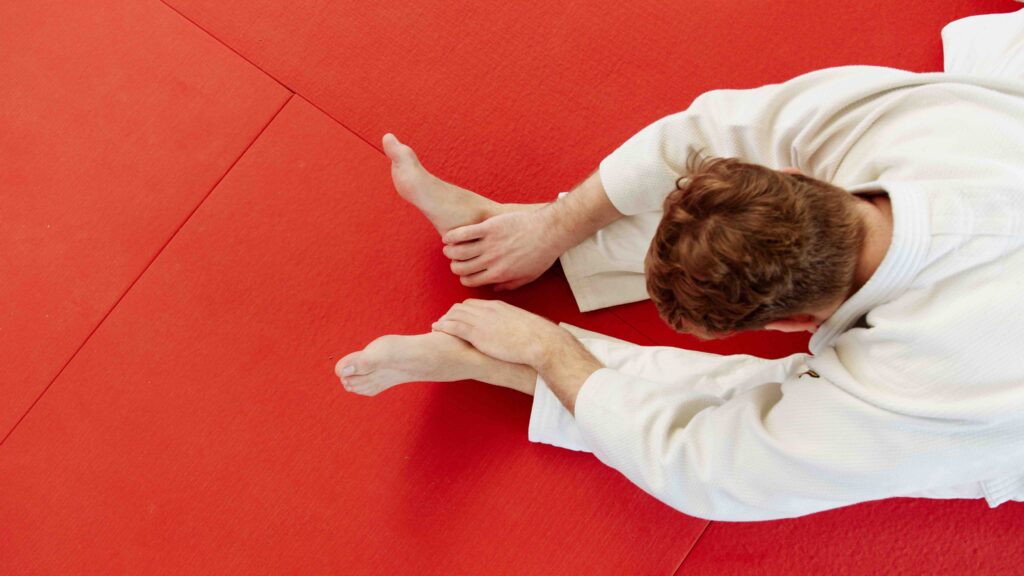
Though your physical abilities and fitness are quite important for training karate, that is something that will greatly improve with training, and you probably know that already. However, there is something that can, much more than physical fitness, determine how long you will be training karate for, and that is your mindset.
Bruce Lee and Jackie Chan films have done much more good than bad in the Western world for Eastern martial arts, but let’s face it; they gave birth to quite a lot of misconceptions as well. You aren’t going to meditate for hours standing on one leg on a pole and become a Kung Fu Panda in 3 months. These thoughts and wishes (which is all they are) are the result of expectations set way too high, all due to momentary inspiration when watching a movie.
The right mindset when going into training karate, at least in my opinion, which is based on my years of experience in karate school, is just to have an open mind. Do not think of anything specific, I would even say that you shouldn’t have expectations at all. It is a great way to get scammed, but that is exactly why you do your research beforehand. In a legitimate, authentic dojo, all you should do is go and be prepared to learn and go through immense hardships and, probably, a lot of pain. You as a human being will evolve, and as a plus, you will also know how to fight.
Focus on the Basics
Many people say this and in many areas of life, yet I cannot stress this enough: focus on the basics! In karate, the set of basic movements that make up the martial art like bricks make up a wall that is called Kihon. This contains all the kicks, punches, and blocks in their basic form. In the beginning, aside from physical conditioning, the only thing you should focus on is the Kihon part of the training.
Everybody knows you want to learn how to do a spinning hook kick, you might even want to impress someone with these skills, but then you have the wrong mindset, and you should read the previous section. Going in with the right mindset, which is to just start training with the sole intention of learning, will get you to learn the basics properly. Bruce Lee once said, “I fear not the man who has practiced 10,000 kicks once, but I fear the man who has practiced one kick 10,000 times.” And oh how right he was.
If you are already relaxed, calm, and open, great, but if you are an enthusiastic and excited to-be karateka who expects to become a ninja, you will realize that the first 6 months to one year is possibly the most crucial time to learn, and you will realize it way too late. It is a lot harder to relearn basic movements because they become engrained in a bad way. If you want to be a successful karateka, this is one of the most important things I can tell you from my experience.
Reflecting On My Experience
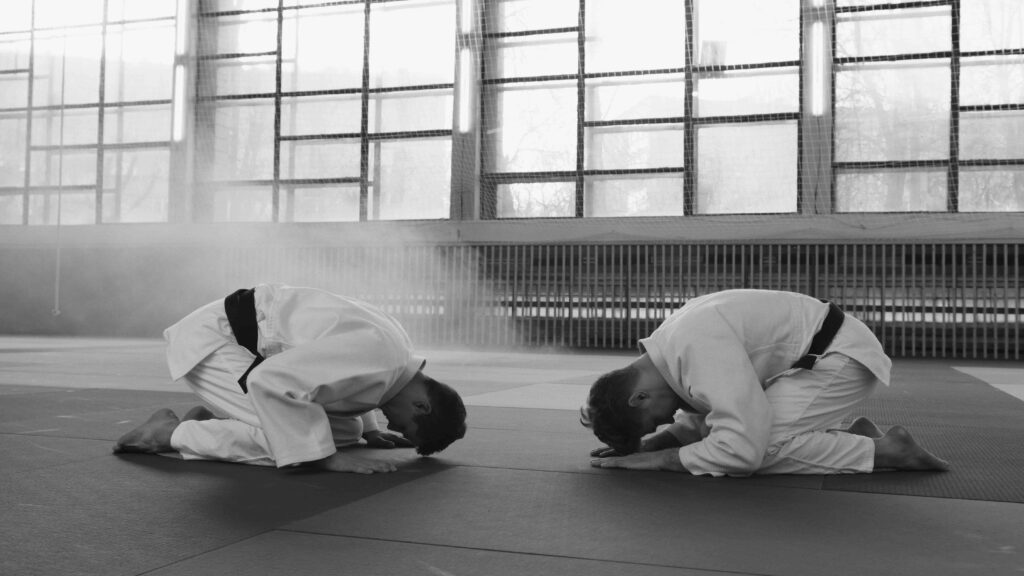
I have spent the last 7 years actively training karate, and I can tell you, I would have given up many things to hear these tips from someone older than me. As I mentioned earlier, my first dojo (the Shotokan) was a scammy, inauthentic place where they tried to rip me off, and only after two months of spending way too much money on them did I realize that I should quit.
I was also one of those kids (17 years old when I started) who thought they would rule the world in a couple of months of karate training, and my excessive and overwhelming expectations stopped me from advancing at the speed I could have advanced at, were I to practice all basic techniques properly. It is one of those things you will regret later, and spend double the time making up for.
After the Shotokan dojo, I managed to find a Kyokushin dojo which was as authentic as a dojo can be (second step from Mas Oyama himself) and had great teachers. After training for nearly a decade, I can say that properly training karate can be truly life-changing. It will ground you in the present, make you more aware of everything around you and yourself, and also improve most aspects of you as a person. The key phrase here, however, was properly training. And also, have a lot of fun while you are at it!
Author: Robert M from Way. of Martial Arts
Thanks for reading & watching, we hope you enjoyed it, please LIKE, SHARE and don’t forget to SUBSCRIBE to World of Martial Arts Television for more great content!!