

By Tim Johnston
Kobudo
Okinawan Kobudo literally “old martial way of Okinawa” is the weapon systems of Okinawan Martial Arts.
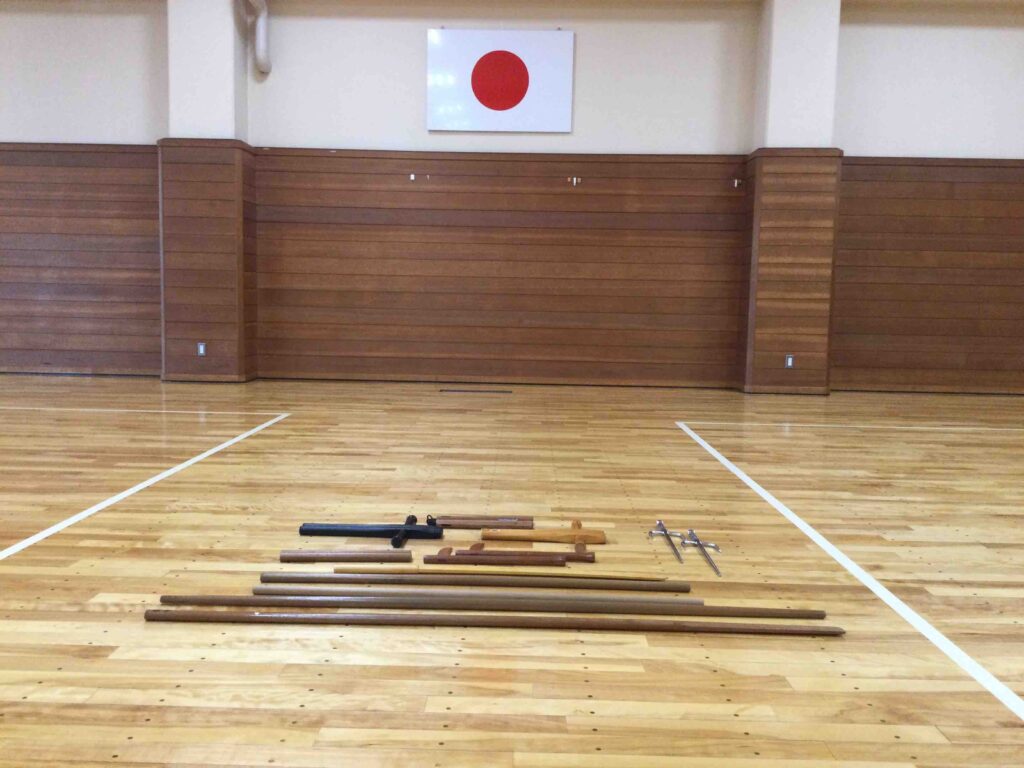
Okinawan Martial Arts refers to the Martial Arts, such as Karate, Tegumi and Okinawan Kobudo, which originated among the indigenous people of Okinawa island. Due to its central location, Okinawa was influenced by various cultures with a long history of trade and cultural exchange, including Japan, China, and Southeast Asia, that greatly influenced the development of Martial Arts on Okinawa.

Weapons
Okinawan Kobudō was at its peak some 100 years ago and of all the authentic Okinawan Kobudō kata practiced at this time, only relatively few, by comparison, remain extant. In the early 20th century, a decline in the study of Ryūkyū Kobujutsu (as it was known then) meant that the future of this martial tradition was in danger. During the Taishō period (1912–1926) some martial arts exponents such as Yabiku Moden made great inroads in securing the future of Ryūkyū Kobujutsu. Many of the forms that are still known are due to the efforts of Taira Shinken who travelled around the Ryūkyū Islands in the early part of the 20th century and compiled 42 existing kata, covering eight types of Okinawan Weapons.
*Below are some of the Kobudo style Okinawan Weapons Our Shorin-ryu Karate School Practices.
Tanbo

The Tanbo, sometimes spelled Tambo, is a short staff (compared to a bo, or a hambo) made of hardwood or bamboo. Its length is determined by measuring from the tip of the elbow to the wrist. Tambo can be used in pairs. Today the Tambo is used by various martial arts, schools including Jujitsu, Aikido, Kobudo, Hapkido, etc.

Tambo are swung using the elbow or shoulder, or manipulated with the wrist. Many of the motions are similar to sword strokes. The Tambo can be deadly in skilled hands. The main use is to attack the outer edges of the human bones with speed and accuracy.
Tonfa

The tonfa may have originated as the handle of a millistone used for grinding grain. It is traditionally made from red oak, and can be gripped by the short perpendicular handle or by the longer main shaft.

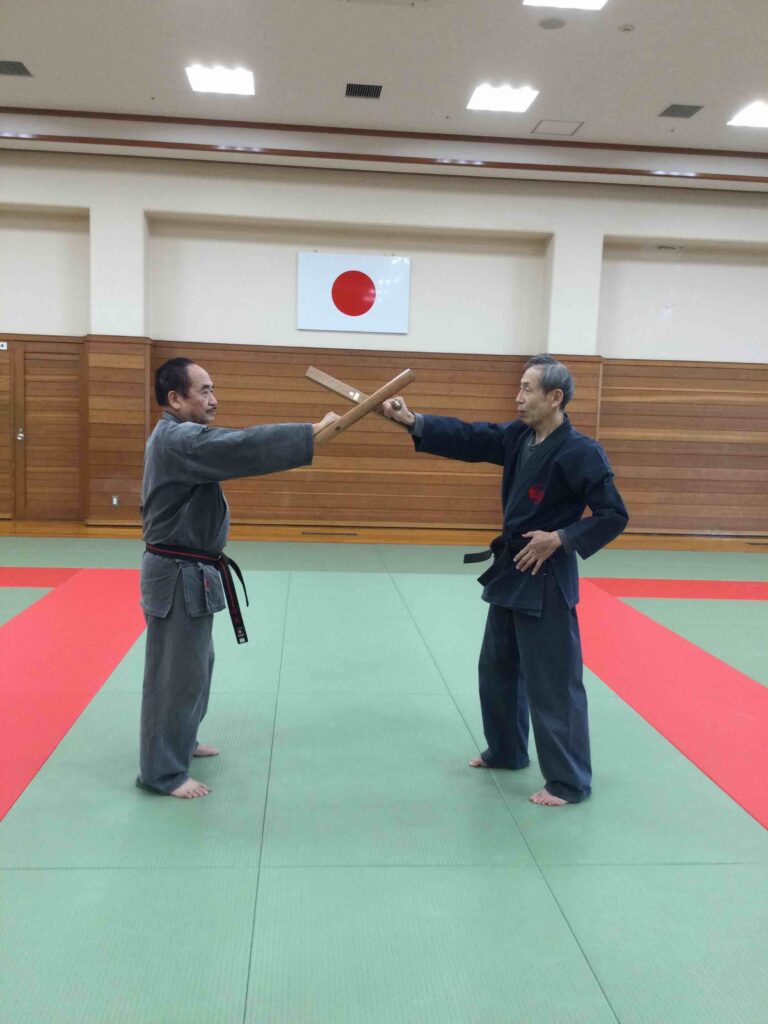
As with all Okinawan weapons, many of the forms are reflective of “empty hand” techniques. The tonfa is more readily recognized by its modern development in the form of the side handle police baton, but many traditional tonfa techniques differ from side-handle baton techniques. For example, tonfa are often used in pairs, while side-handle batons generally are not.
Jō
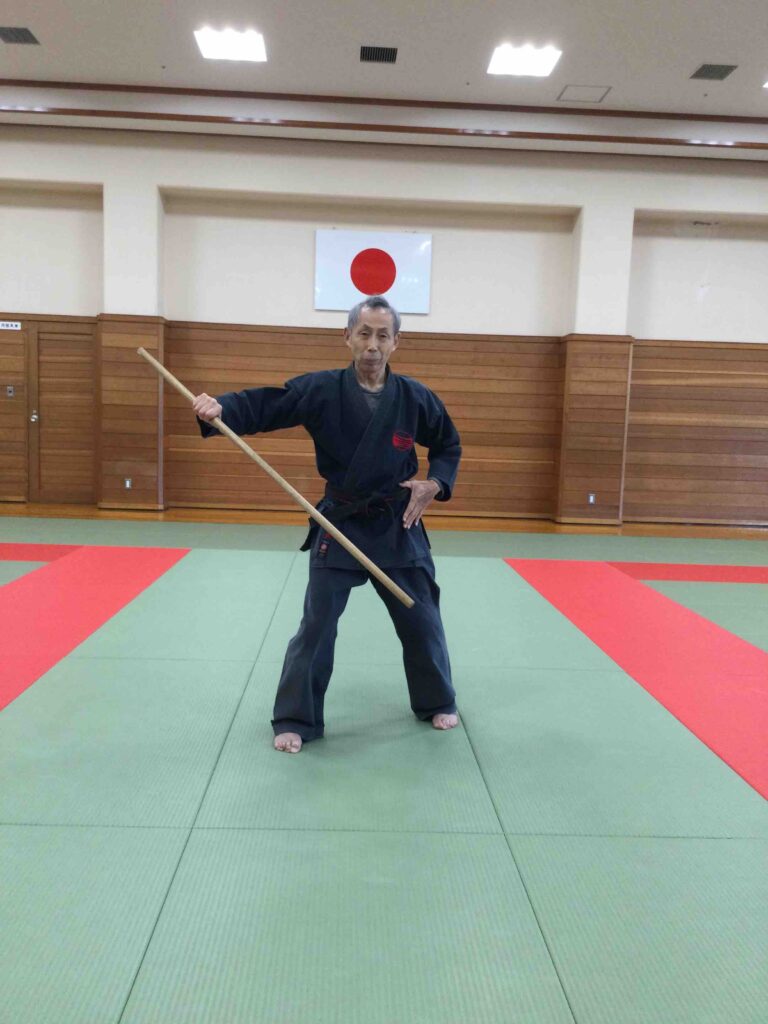
The Jō is a fascinating weapon. Simply constructed yet multifunctional. Practicing with it enriches any empty-handed fighting art.

The techniques for Jō were reportedly invented by Muso Gonnosuke Katsuyoshi 1605, after he was defeated by the famous Swordsman Miyamoto Musashi (1584 – 1645). They fought each other in a duel sometime between 1608 and 1611. A Jō is an approximately 1.27 meter (4.2 ft) wooden staff, used in some Matial Arts. The Jo staff is shorter than the Bō. Today the Jō is still used by some Japanese Police Forces.
Bō
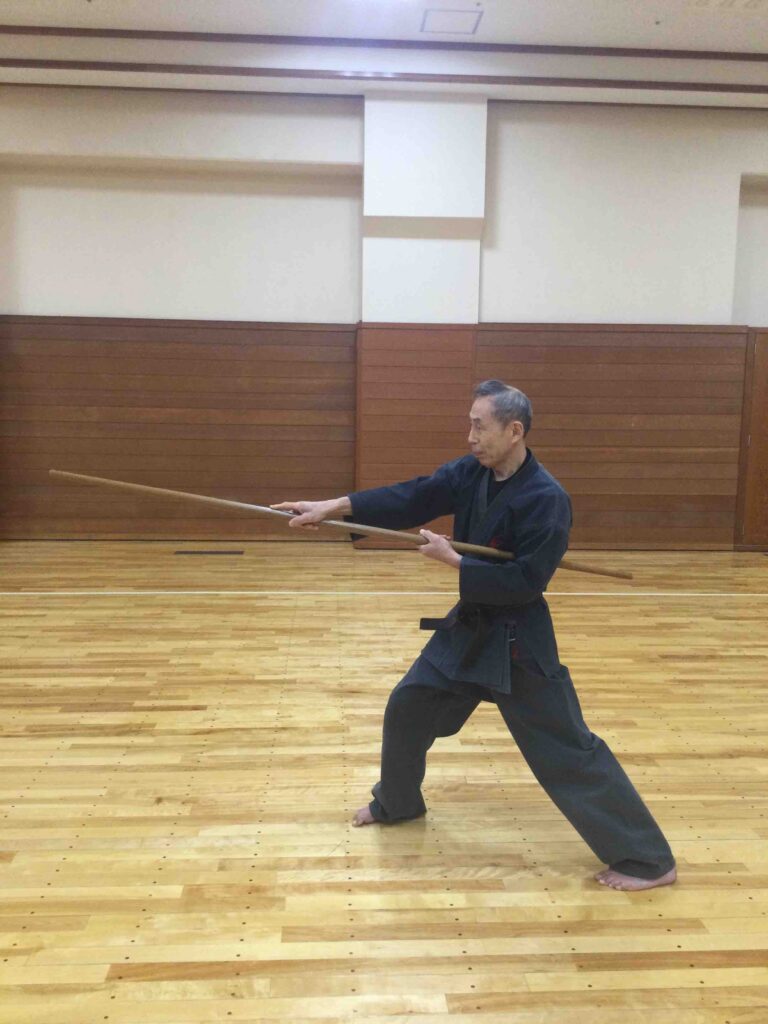
The Bō is a six-foot long staff, sometimes tapered at either end. It was perhaps developed from a farming tool called a tenbin: a stick placed across the shoulders with baskets or sacks hanging from either end. The Bo was also possibly used as the handle to a rake or a shovel. The Bō, along with shorter variations such as the Jo and Hanbo could also have been developed from walking sticks used by travelers, especially monks.
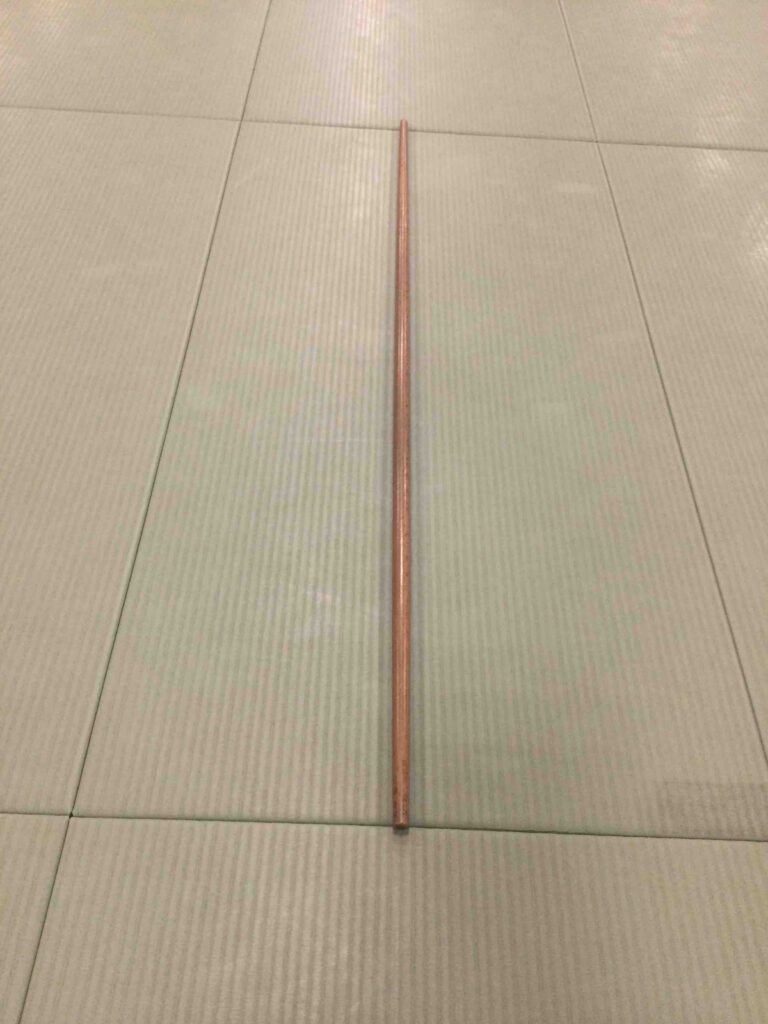
The Bō is considered the ‘king’ of the Okinawa weapons, as all others exploit its weaknesses in fighting it, whereas when it is fighting them it is using its strengths against them. The Bo is the earliest of all Okinawan weapons (and effectively one of the earliest of all weapons in the form of a basic staff), and is traditionally made from red or white oak.
Sai

The Sai is a three-pronged truncheon sometimes mistakenly believed to be a variation on a small, hand-held rake a tool used to create furrows in the ground. This is highly unlikely as metal on Okinawa was in short supply at this time and a stick would have served this purpose more satisfactorily for a poor commoner, or Heimin.
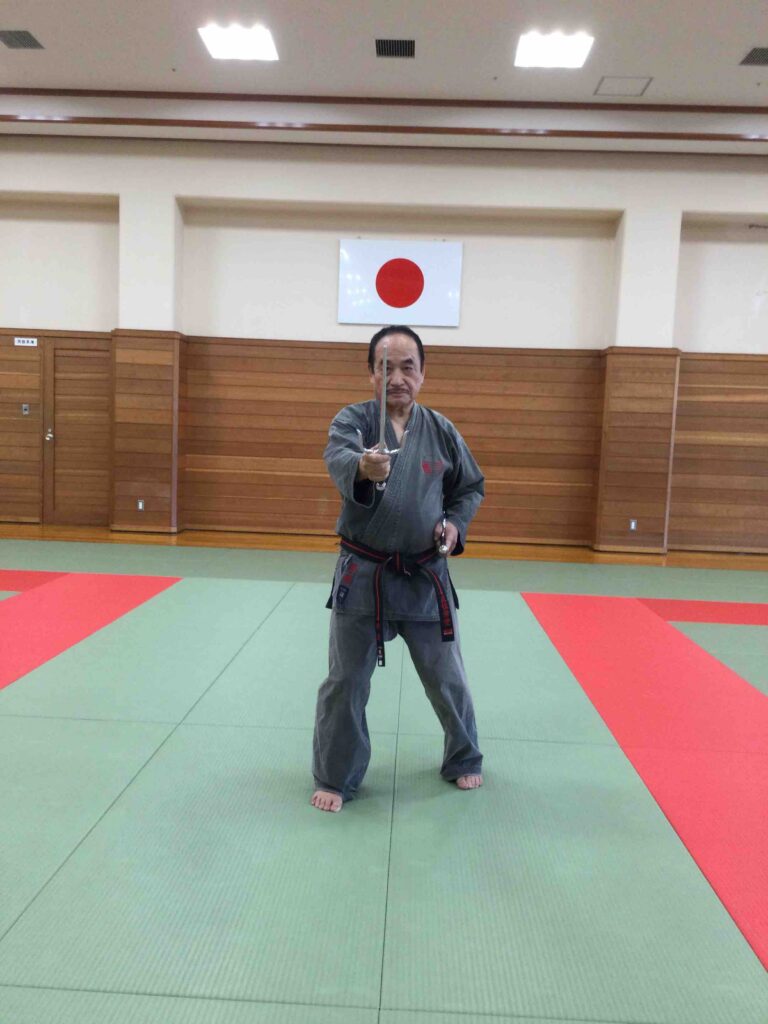
The Sai appears similar to a short sword, but is not bladed and the end is traditionally blunt. The weapon is metal and of the truncheon class with its length dependent upon the forearm of the user. The two shorter prongs on either side of the main shaft are used for trapping (and sometimes breaking) other weapons such as a sword or Bo. A form known as Nunti Sai, sometimes called Manji Sai (due to its appearance resembling the swastika kanji) has the two shorter prongs pointed in opposite directions.
Nunchaku
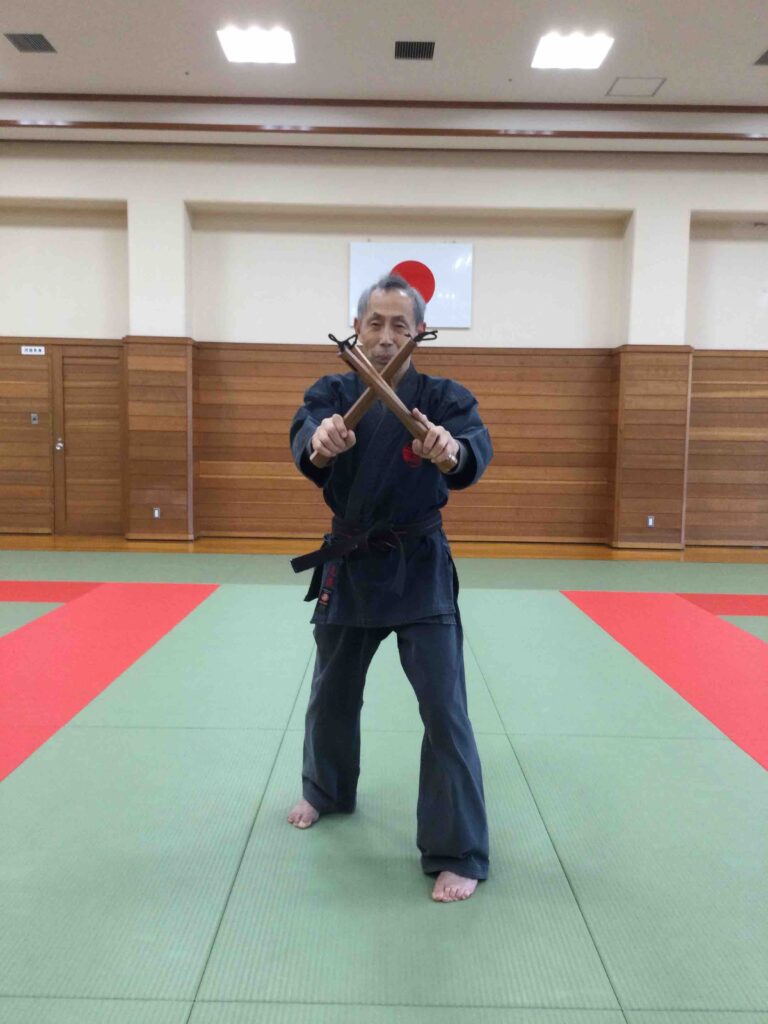
A nunchaku is two sections of wood (or metal in modern incarnations) connected by a cord or chain. There is much controversy over its origins: some say it was originally a Chinese weapon, others say it evolved from a threshing flail, while one theory purports that it was developed from a horse’s bit.
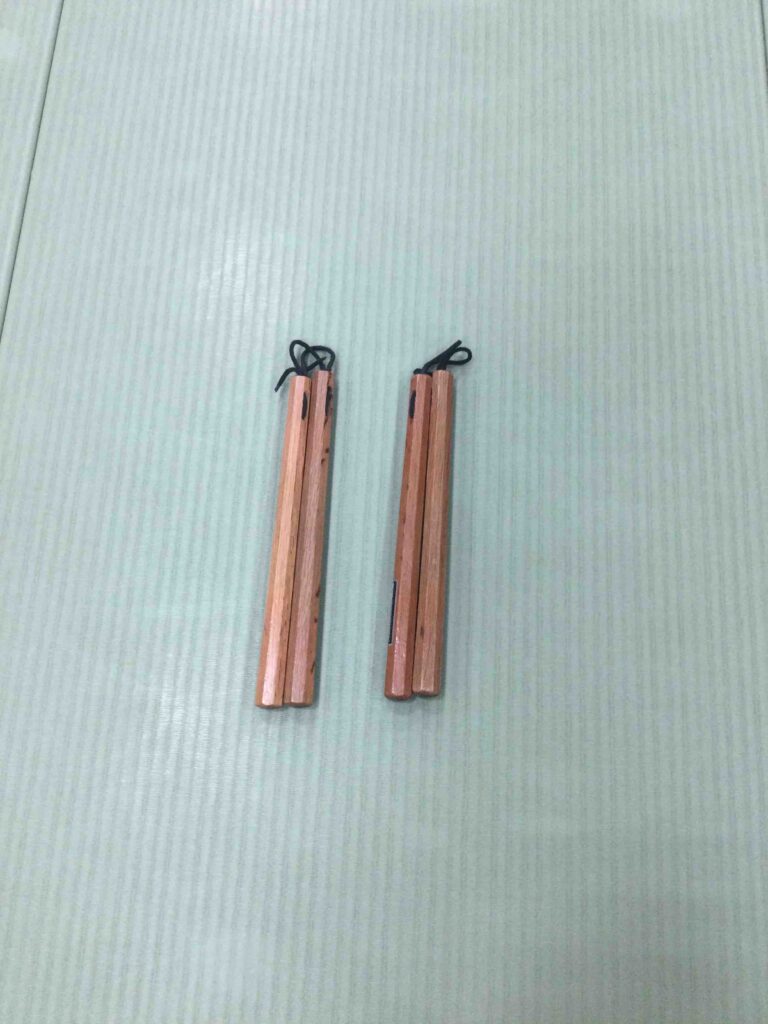
Chinese Nunchaku tend to be rounded, whereas Okinawan ones are octagonal, and they were originally linked by horse hair. There are many variations on the nunchaku, ranging from the three sectional staff. The nunchaku was popularized by Bruce Lee in a number of films, made in both in Hollywood and Hong Kong. This weapon is illegal in Canada, Australia (unless a permit is held) and parts of Europe.
Kama
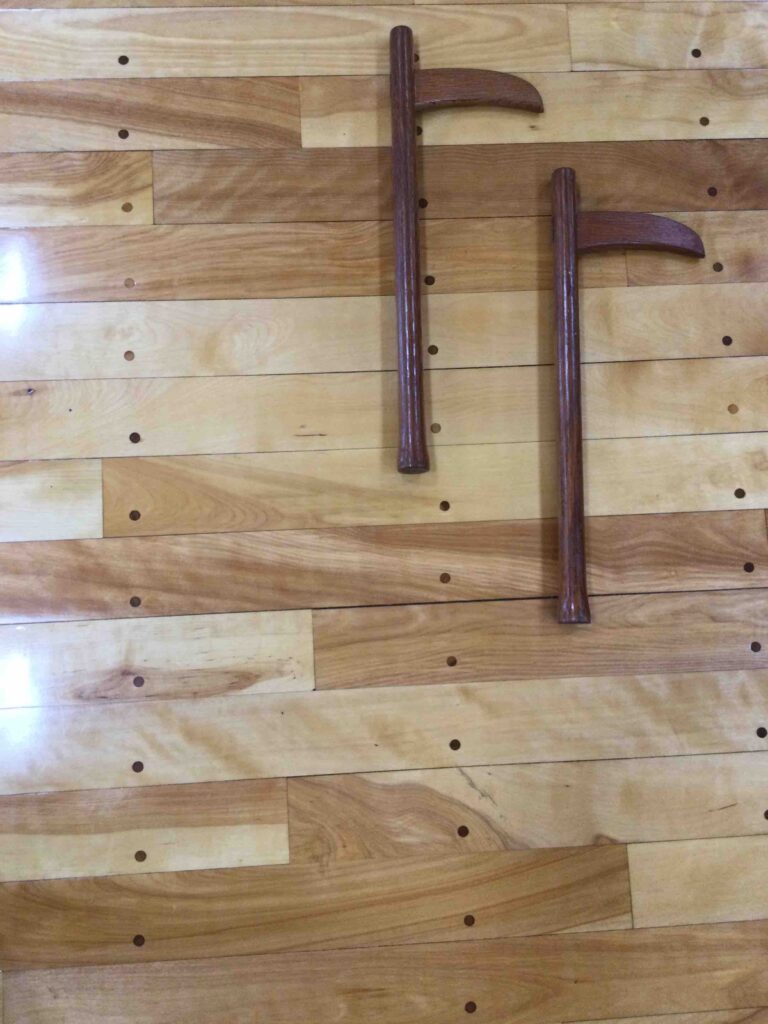
The Kama is a traditional farming sickle, and considered one of the hardest to learn due to the inherent danger in practicing with such a weapon.
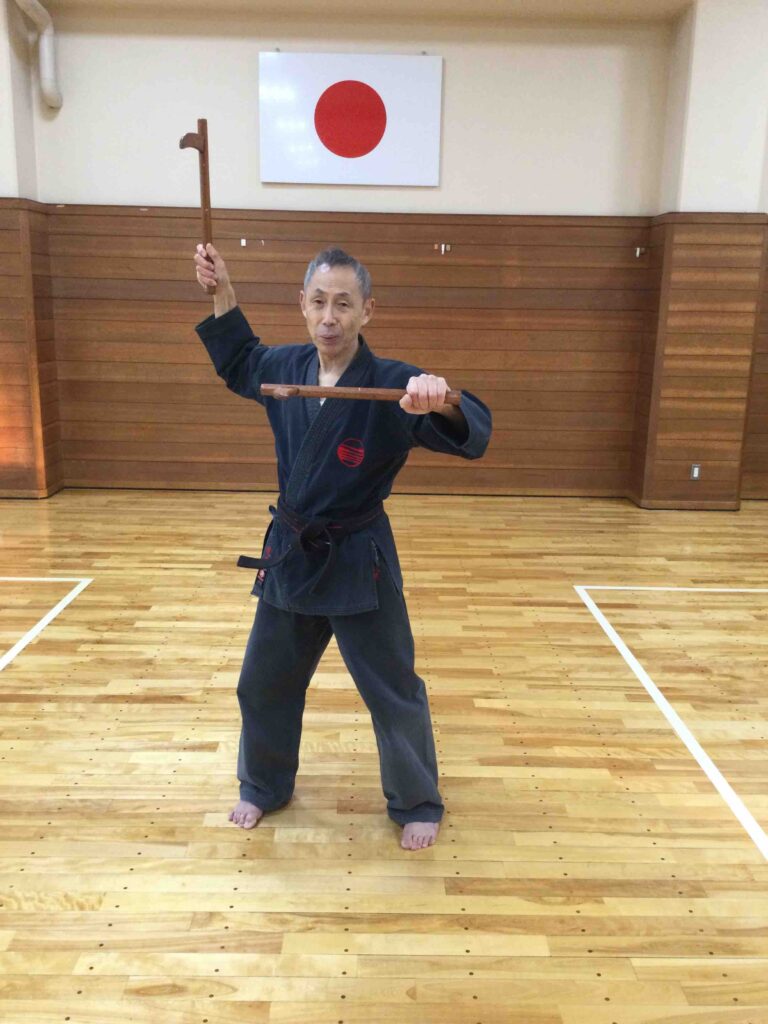
The point at which the blade and handle join in the “weapon” model normally has a nook with which a Bo can be trapped, although this joint proved to be a weak point in the design, and modern day examples tend to have a shorter handle with a blade that begins following the line of the handle and then bends, though to a lesser degree; this form of the Kama is known as the Natagama, The edge of a traditional rice sickle, such as one would purchase from a Japanese hardware store, continues to the handle without a notch, as this is not needed
Author: Tim Johnston
Thanks for reading & watching, we hope you enjoyed it, please LIKE, SHARE and don’t forget to SUBSCRIBE to World of Martial Arts Television for more great content!!